

IN-SCHOOL VISIBILITY ACROSS usa & canada
In-school advertising that reaches students where decisions form.
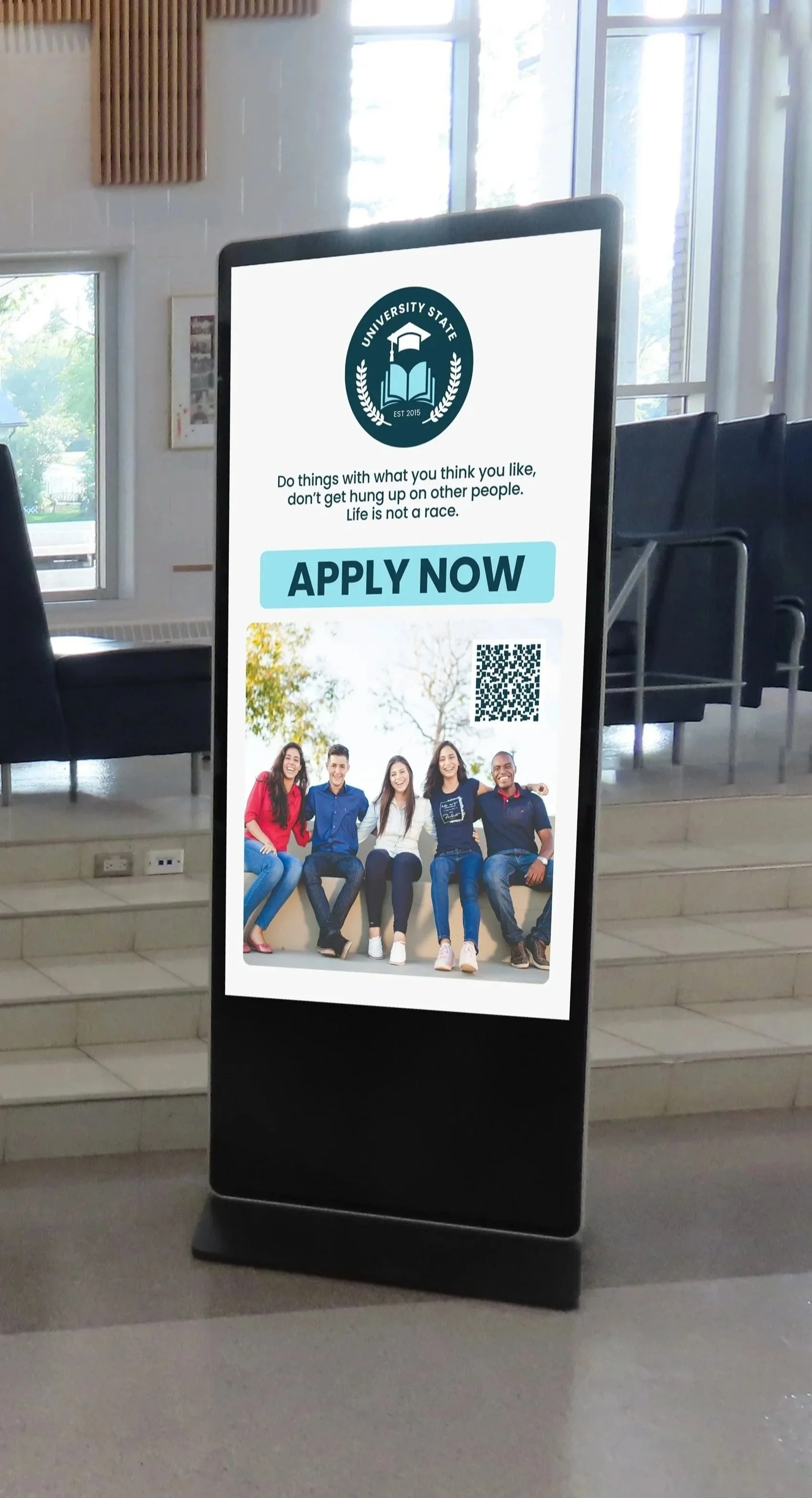
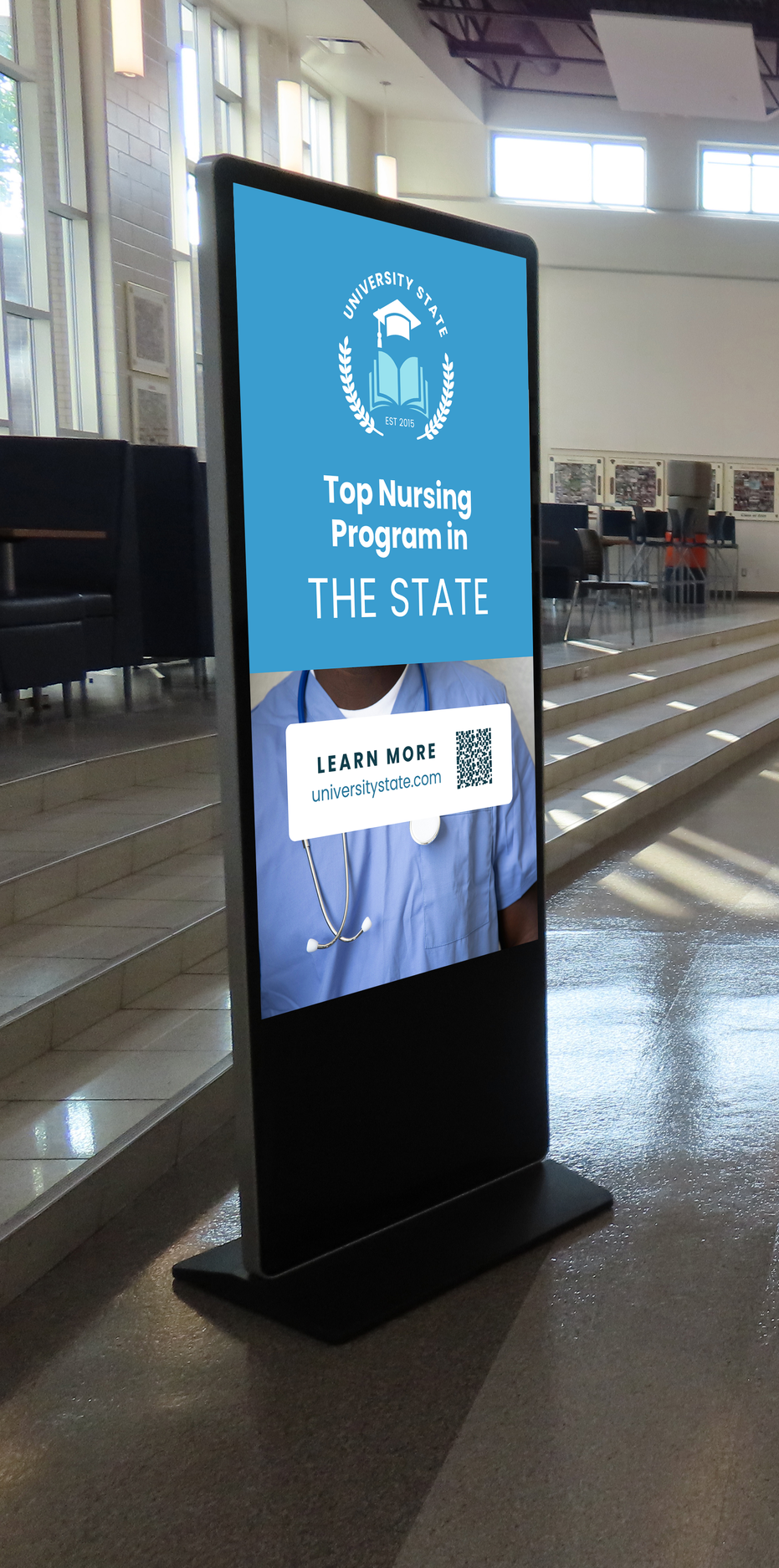
OnDeck's always-on screens put your institution inside priority high schools and across the digital feeds students scroll between classes.
Show up where student decisions are forming. Presence now drives enrollment later.
750+
North american SCHOOLS
500K+
Students Reached Daily
1 Million+
Daily Impressions
Always On
Consistent Presence
The Challenge
Enrollment decisions are forming long before a student clicks an ad.
Students spend six to eight hours a day inside their school. That's where familiarity builds. That's where your brand should be.
You're defending awareness spend without the numbers leadership wants.
You won't feel the damage from going dark until it's too late to reverse it.
You can't reliably or consistently reach students through their phones.
Once you've conceded ground in a feeder school, winning it back is costly.
WHAT'S AT RISK
Risk builds before it shows up in your enrollment numbers.
Awareness gaps are invisible until they're not. A student who doesn't recognize your institution in grade 10 or 11 won't suddenly discover you during application season. Visibility lost today is enrollment lost two or three years from now.
What OnDeck Does
A consistent visibility layer, inside the schools that shape your enrollment.
The institutions winning application season built their presence long before it started.

In-school digital screen network
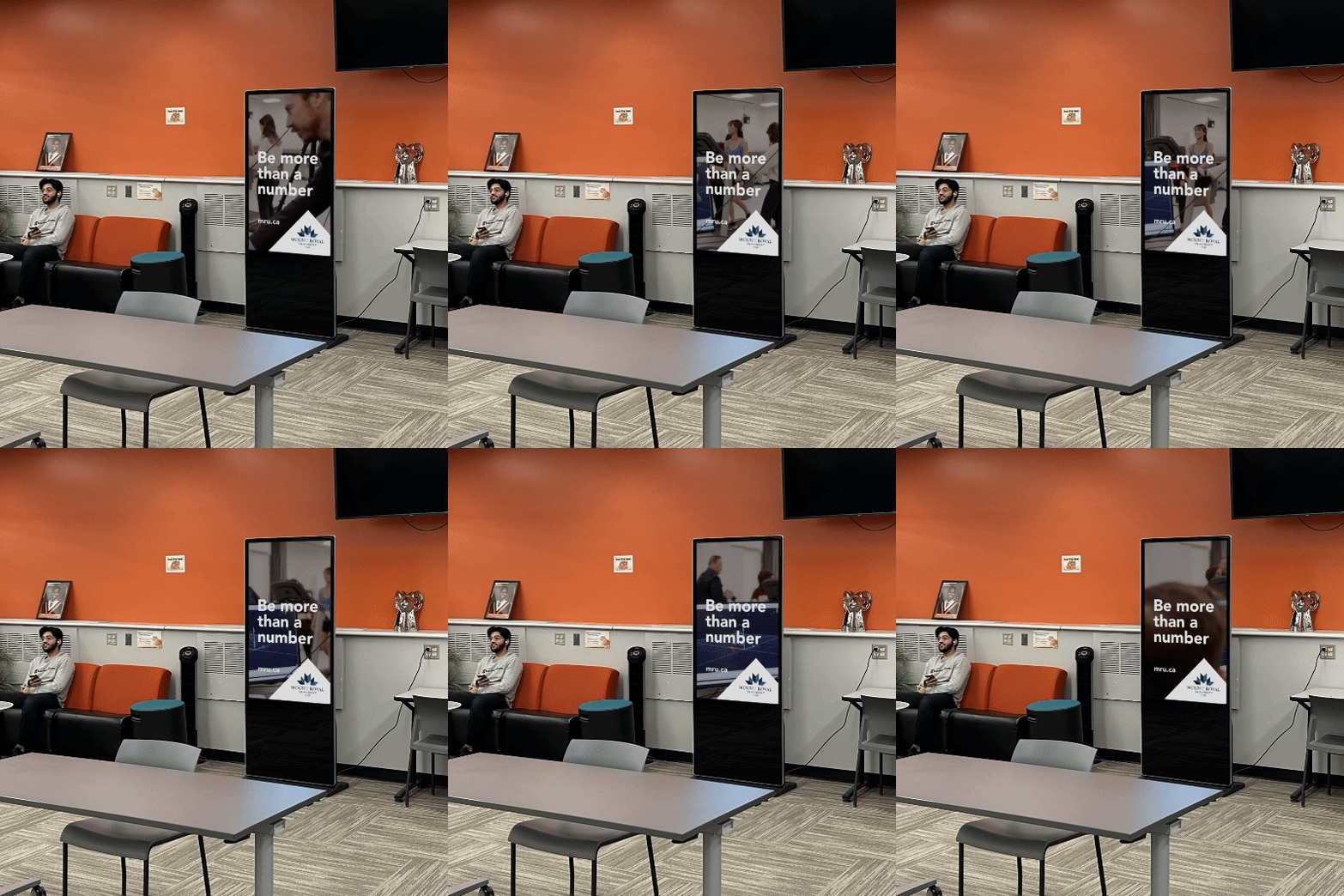
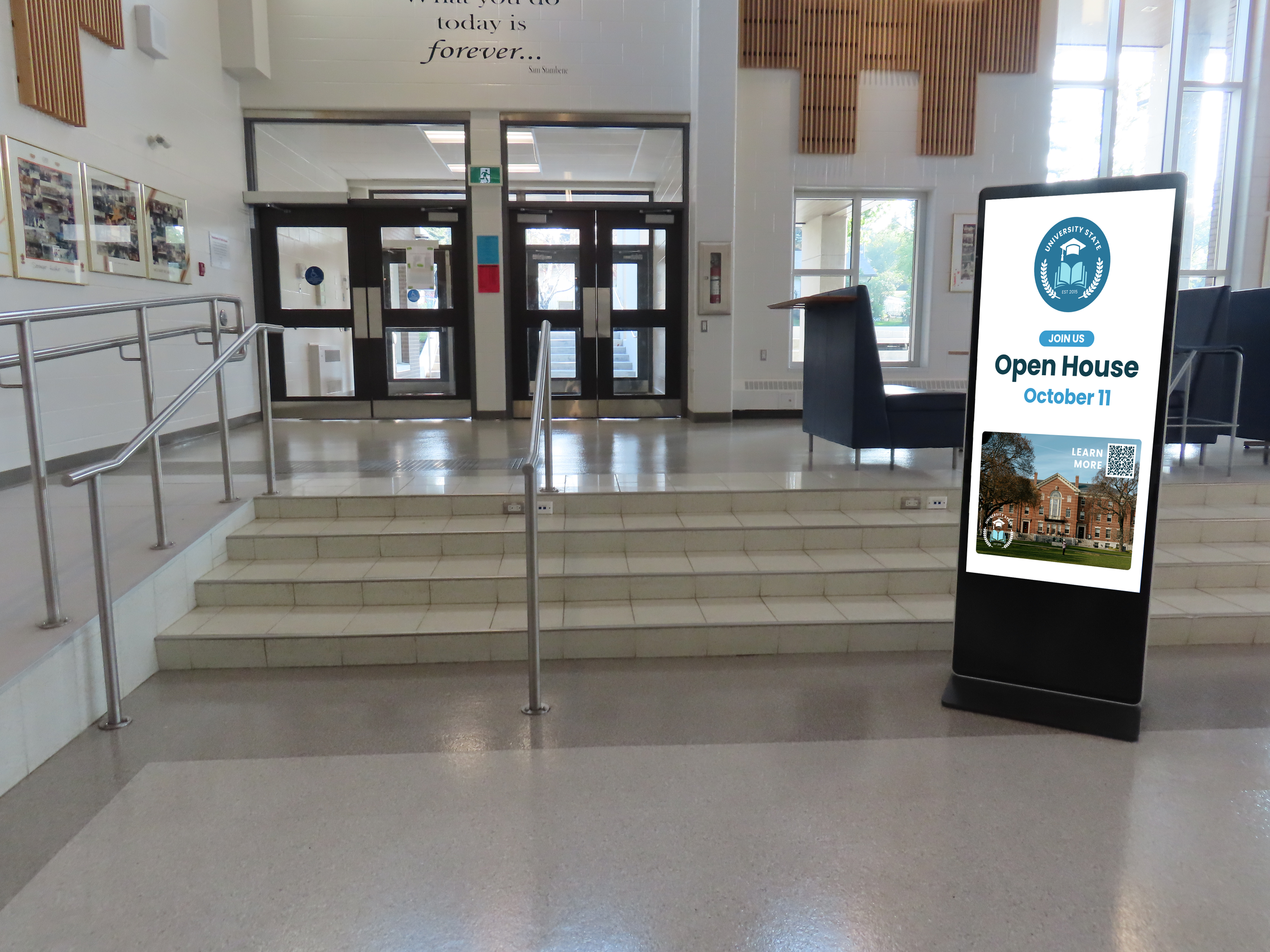
Your institution on high-traffic digital screens inside high schools, in hallways, common areas, and the spaces where students actually are. Non-skippable. Consistent throughout the year.

Digital & programmatic reinforcement
Digital lands harder when a student already knows your name. Once students have seen you in school, we follow them across CTV, display, social, and more. Exposure becomes familiarity.

Coverage across full decision cycles
Students start forming impressions long before senior year. OnDeck keeps your institution visible from early consideration through application season, across every channel that matters.
how it works
Simple to activate. No ongoing lift for your team.
You get coverage and your team keeps their bandwidth. Share your target schools. We handle installation, content management, and updates throughout the year. No dashboards to monitor. No internal resources required.
01
Identify schools that matter most
We map your priority feeder schools and geo-markets. Every placement is specific and defensible to leadership.
02
Establish consistent presence
Your creative runs across our screen network from September through June. Predictable visibility, no platform risk.
03
Reinforce and sustain over time
Programmatic and social extend reach beyond the school day. Awareness compounds downstream.
WHAT our higher ed partners are saying
Presence holds. Gaps cost.
why it fits
Built to work the way your team already operates.
Same workflows, meaningful visibility. Built for the long game.

No algorithm risk. In-school screens aren't subject to bidding changes, app policy shifts, or platform volatility.

Visibility you can defend. School-level placement data and consistent delivery give you the documentation to justify the spend.
Low operational lift. We handle placement, maintenance, and content rotation. Your team keeps their time.
Higher ed only. No unrelated advertisers sharing space with your brand. Every school we're in is an environment your institution belongs in.
Trusted by schools. No data collection. No cameras or microphones. Your brand appears in a context students already trust.
Works alongside your existing spend. OnDeck is an awareness layer that makes your digital, social, and direct campaigns more efficient.
750+ schools across the United States and Canada. Your coverage map is waiting.
The question isn’t whether you can afford to be present. It's whether you can afford not to be.